
PSW vs Nurse: Which Healthcare Career Path Will Change Your Life in 2026?
Imagine standing at a crossroads where two paths stretch before you: both leading to fulfilling careers in healthcare, both offering the chance to make a real difference in people's lives. In a world where healthcare demands continue to grow and evolve, choosing between becoming a Personal Support Worker (PSW) or a Nurse represents one of the most important decisions you'll make for your future. As we navigate through 2026, both career paths offer unique opportunities to transform not just your own life, but the lives of countless patients you'll serve.
The healthcare landscape is rapidly changing, and with it, the roles and opportunities available to healthcare professionals. Whether you're a recent high school graduate, considering a career change, or looking to advance your current healthcare position, understanding the distinctions between these two vital roles will help you make an informed decision that aligns with your goals, lifestyle, and passion for patient care.
Understanding the Core Differences
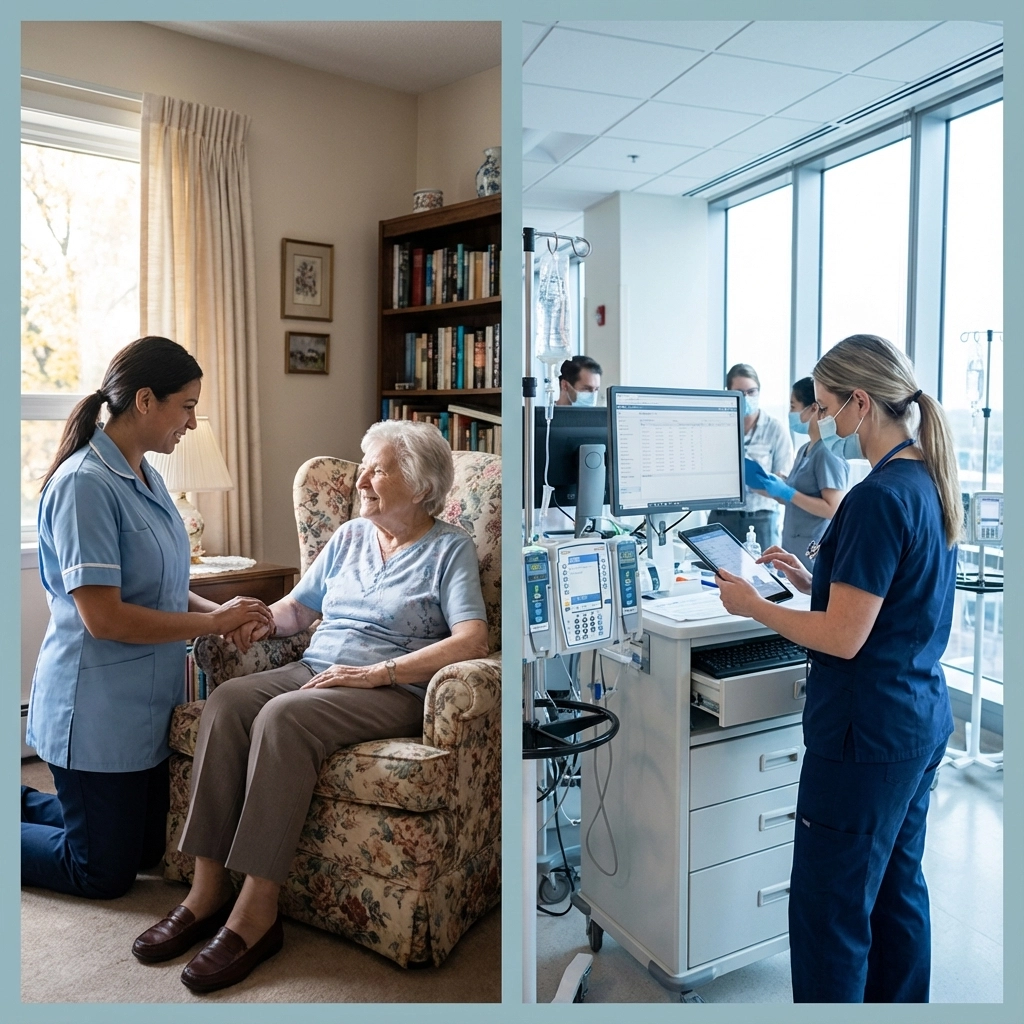
Personal Support Workers serve as the compassionate foundation of healthcare teams, providing essential daily care and emotional support to patients in various settings. PSWs assist with activities of daily living, including personal hygiene, mobility support, medication reminders, and companionship. They work closely with patients in their most vulnerable moments, building meaningful relationships while ensuring comfort and dignity.

Nurses, on the other hand, take on more complex clinical responsibilities that require advanced medical knowledge and decision-making skills. They assess patient conditions, administer medications, perform medical procedures, develop care plans, and serve as critical links between patients, families, and healthcare teams. Nurses must think critically, respond to emergencies, and coordinate comprehensive patient care across multiple disciplines.
The fundamental difference lies in the scope of practice: while PSWs focus on direct personal care and emotional support, nurses engage in clinical assessment, medical intervention, and complex care coordination. Both roles are essential, but they require different skill sets and levels of medical training.
Education and Training Requirements in 2026
PSW Training Path: • Certificate programs typically lasting 6 months to 1 year • Hands-on clinical experience in healthcare facilities • Focus on personal care techniques, communication skills, and basic health knowledge • Provincial certification requirements and ongoing professional development • More affordable and accessible entry point into healthcare
Nursing Education Path: • Bachelor of Science in Nursing (BSN) degree: increasingly the standard requirement • 4-year comprehensive program covering anatomy, pharmacology, clinical skills, and critical thinking • Extensive clinical rotations across various healthcare settings • National licensure examination (NCLEX) requirement • Opportunities for specialization and advanced degrees
The education investment for nursing is significantly higher, but it opens doors to greater advancement opportunities and earning potential. For many aspiring healthcare professionals, PSW training offers a faster entry into the field with the option to pursue nursing education later through bridging programs.

Salary and Financial Outlook for 2026
The financial landscape for both careers continues to evolve as healthcare systems recognize the value of all team members. PSW salaries in 2026 range from $35,000 to $45,000 annually, depending on location, experience, and work setting. Many PSWs work in long-term care facilities, home care agencies, or community support programs.
Nursing salaries typically start higher, with new graduates earning between $55,000 and $70,000 annually. Experienced nurses and those in specialized areas can earn $80,000 to $100,000 or more. The earning potential increases significantly with advanced practice roles, leadership positions, and specialization certificates.
Beyond base salaries, consider these factors: • Job security: Both roles offer excellent job stability with growing demand • Benefits: Nurses typically receive more comprehensive benefit packages • Overtime opportunities: Many healthcare facilities offer premium pay for additional shifts • Location flexibility: Both careers offer opportunities across urban and rural settings
Career Advancement and Growth Opportunities
PSW Career Progression: • Lead PSW or supervisor roles in care facilities • Specialized training in areas like dementia care or palliative care • Transition to nursing through bridging programs • Community outreach and education roles • Private practice opportunities in home care
Nursing Career Advancement: • Specialization in areas like emergency, pediatrics, or mental health • Leadership roles as charge nurse, nurse manager, or director • Advanced practice opportunities (Nurse Practitioner, Clinical Nurse Specialist) • Education roles in nursing schools or continuing education • Research and policy development positions
The nursing path offers more diverse advancement opportunities, but PSW roles provide essential stepping stones and can lead to deeply satisfying career specializations. Many successful nurses credit their PSW experience as foundational to their clinical skills and patient advocacy abilities.

Work Environments and Daily Experiences
PSW Work Settings: • Long-term care facilities and nursing homes • Patients' homes through home care agencies • Assisted living communities • Adult day programs and community centers • Hospitals providing basic care support
PSWs often develop long-term relationships with clients, experiencing the satisfaction of seeing gradual improvements and providing consistent, compassionate care. The work is physically demanding but emotionally rewarding, with opportunities to make meaningful connections with patients and families.
Nursing Work Environments: • Hospitals across all departments and units • Community health centers and clinics • Schools and occupational health settings • Research facilities and pharmaceutical companies • Government agencies and policy organizations
Nurses face diverse daily challenges that require quick thinking, technical skills, and emotional resilience. The variety in nursing means you can find environments that match your personality: from fast-paced emergency departments to calm community health settings.
Skills and Personal Qualities for Success
Both careers require strong communication skills, empathy, and physical stamina, but they emphasize different strengths:
PSW Success Factors: • Patience and emotional stability • Physical strength and endurance • Detail-oriented approach to personal care • Ability to work independently with minimal supervision • Cultural sensitivity and respect for diverse backgrounds
Nursing Success Qualities: • Critical thinking and problem-solving abilities • Leadership and delegation skills • Adaptability to rapidly changing situations • Technical proficiency with medical equipment • Collaborative teamwork across disciplines
Job Market Outlook and Demand in 2026
The healthcare sector continues to experience unprecedented growth, driven by an aging population and increased focus on preventive care. PSW positions are projected to grow by 15-20% through 2030, particularly in home care and community-based services as more individuals choose to age in place.
Nursing demand remains exceptionally strong, with shortages in many regions creating excellent job security and competitive compensation packages. Specialized nursing roles, particularly in mental health, geriatrics, and community health, show the strongest growth potential.
Both careers offer recession-proof job security: healthcare remains essential regardless of economic fluctuations, making either choice a stable foundation for your future.
Making Your Decision: Which Path Aligns with Your Goals?
Consider these key questions as you evaluate your options:
Choose PSW if you: • Want to enter healthcare quickly with manageable education costs • Prefer building long-term relationships with clients • Enjoy hands-on personal care and daily living support • Value work-life balance and consistent schedules • See this as a stepping stone to nursing or other healthcare roles
Choose Nursing if you: • Are ready for extensive education and clinical training • Thrive in challenging, fast-paced environments • Want diverse career advancement opportunities • Prefer higher earning potential and comprehensive benefits • Are drawn to clinical decision-making and medical interventions
Remember, there's no wrong choice: both paths lead to meaningful careers serving others and making positive impacts in your community.

Your Next Steps Forward
Whether you choose to become a PSW or nurse, your decision represents a commitment to serving others and contributing to the health and well-being of your community. Both roles are essential pillars of our healthcare system, and both offer unique rewards and challenges that can transform your life in profound ways.
As you consider your options, research local training programs, speak with professionals in both fields, and perhaps volunteer or shadow workers to gain firsthand insight into daily responsibilities. The healthcare field needs compassionate, dedicated individuals in all roles: your contribution will make a difference regardless of which path you choose.
Let us embrace the opportunity to shape the future of healthcare while building rewarding, stable careers that offer both personal fulfillment and financial security. The decision you make today will impact not just your own future, but the lives of countless individuals who will benefit from your care, compassion, and professional expertise in the years to come.
Your journey in healthcare starts with a single step: take that step today toward the career that calls to your heart and aligns with your goals for 2026 and beyond. For more information on PSW Programing email: admissions@nmc.today


Comments